

If you're thinking about buying land to build on in Ulster County, there are a few things to check first: whether the soil can handle a septic system, where your water's coming from, which wetland and zoning rules apply, and how you'll get a driveway and power to the house site. Get your builder out to walk the lot early, and write the purchase so it depends on what you find.
Key Takeaways
In short, make the sale depend on checks of the soil, septic, water, wetlands, zoning and access. Your septic soils put a practical cap on bedrooms. The state changed its wetland rules in 2025, and the size cutoff gets lower again in 2028. The costs people underestimate most are long driveways, power runs, ledge and slope. And it pays to bring your builder out to the land before you close, while the answers can still change your mind.
The price of the land is the smallest number

The listing price is only the start of what a lot costs to build on.
A beautiful wooded parcel with a view is easy to fall for. The asking price is right there in the listing. What isn't in the listing is what it costs to make that land buildable: the septic system the soil will accept, the well, the driveway up the hill, the power line from the road, the rock that needs to come out for a foundation. On some lots those costs are routine. On others they're bigger than the land itself, and a few lots can't be built on the way the buyer imagined at all.
The good news is that almost all of this can be checked before closing. The usual way to do it is a due diligence period written into the purchase contract, with the sale contingent on the results. Your real estate attorney can tell you how to structure that. The rest of this guide is what to check during it.
Septic: the soil decides how big you can build
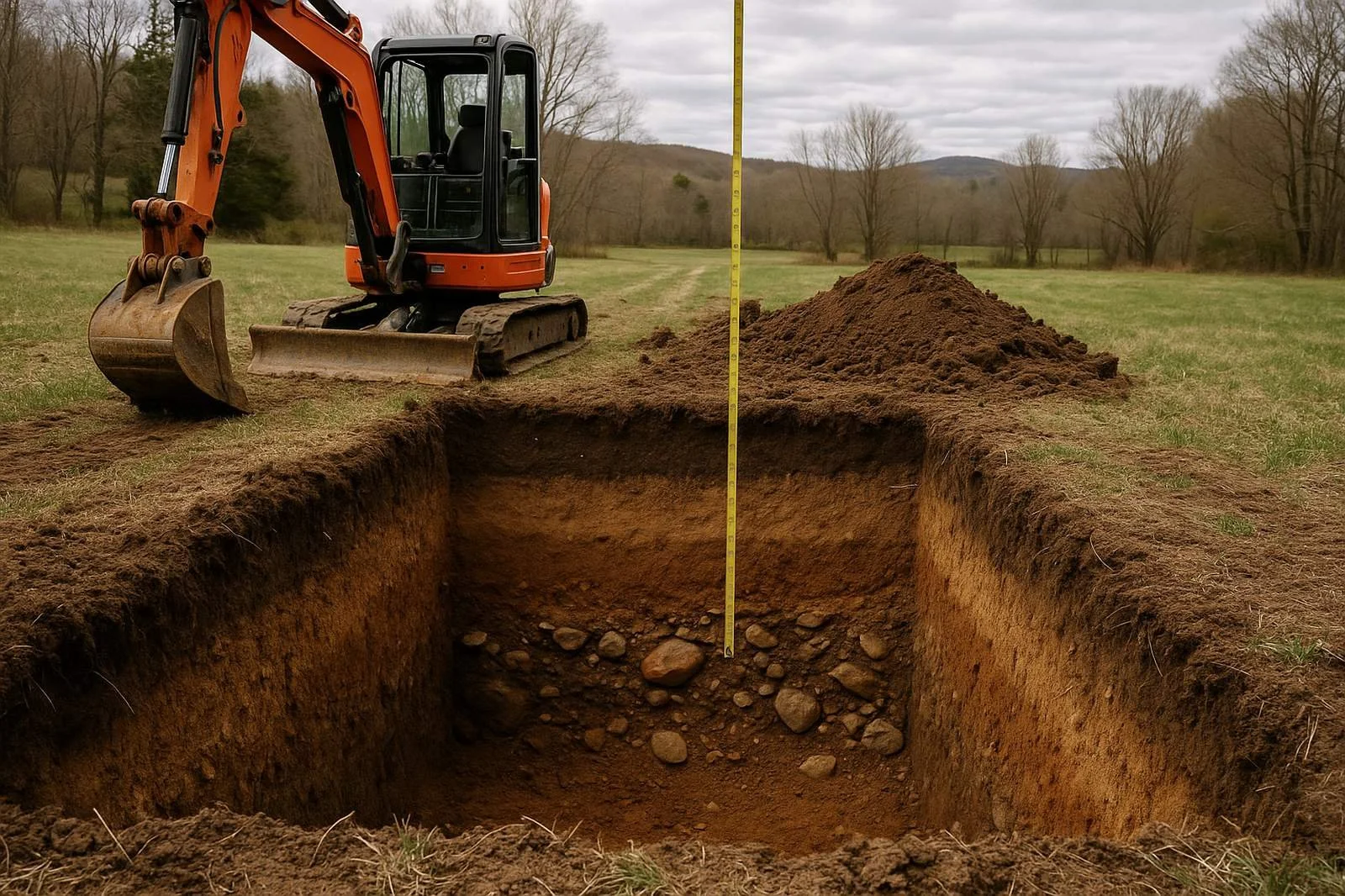
The soil sets a ceiling on how many bedrooms the house can have.
Out in most of rural Ulster County there's no public sewer, so you're putting in your own septic system, and it only works if the soil can actually treat the wastewater. For a new system, New York wants the soil tested. That means deep test holes so someone can see the layers, plus percolation tests that time how fast water drains. If they turn up shallow bedrock, high groundwater or tight clay, you might be looking at a pricier engineered design. Sometimes it rules out the spot you'd picked for the house.
The system is sized by bedrooms. New York's design flow for a new house starts at 110 gallons per day per bedroom, so the soil effectively sets a ceiling on how many bedrooms you can plan. Ask the seller whether soil tests have ever been done on the parcel and get the results. If they're old, or were done for a different house site, plan to test again. The Ulster County Department of Health reviews onsite wastewater systems and is the right first call with questions.
Water: you're probably drilling a well
No public water usually means a private well, and honestly, nobody knows what's down there until the drill finds out. Two houses on the same road can end up with very different depth, yield and water quality.
You can take some of the guesswork out. Talk to the neighbors about how deep they went and whether they've ever run short or had water quality trouble. A driller who works locally will usually have a decent sense of what to expect, too. Set aside some budget in case the well goes deeper or the water needs treatment. And keep in mind the well has to stay a required distance from the septic, which on a small or sloped lot can really limit where either one goes.
Wetlands: the rules changed in 2025
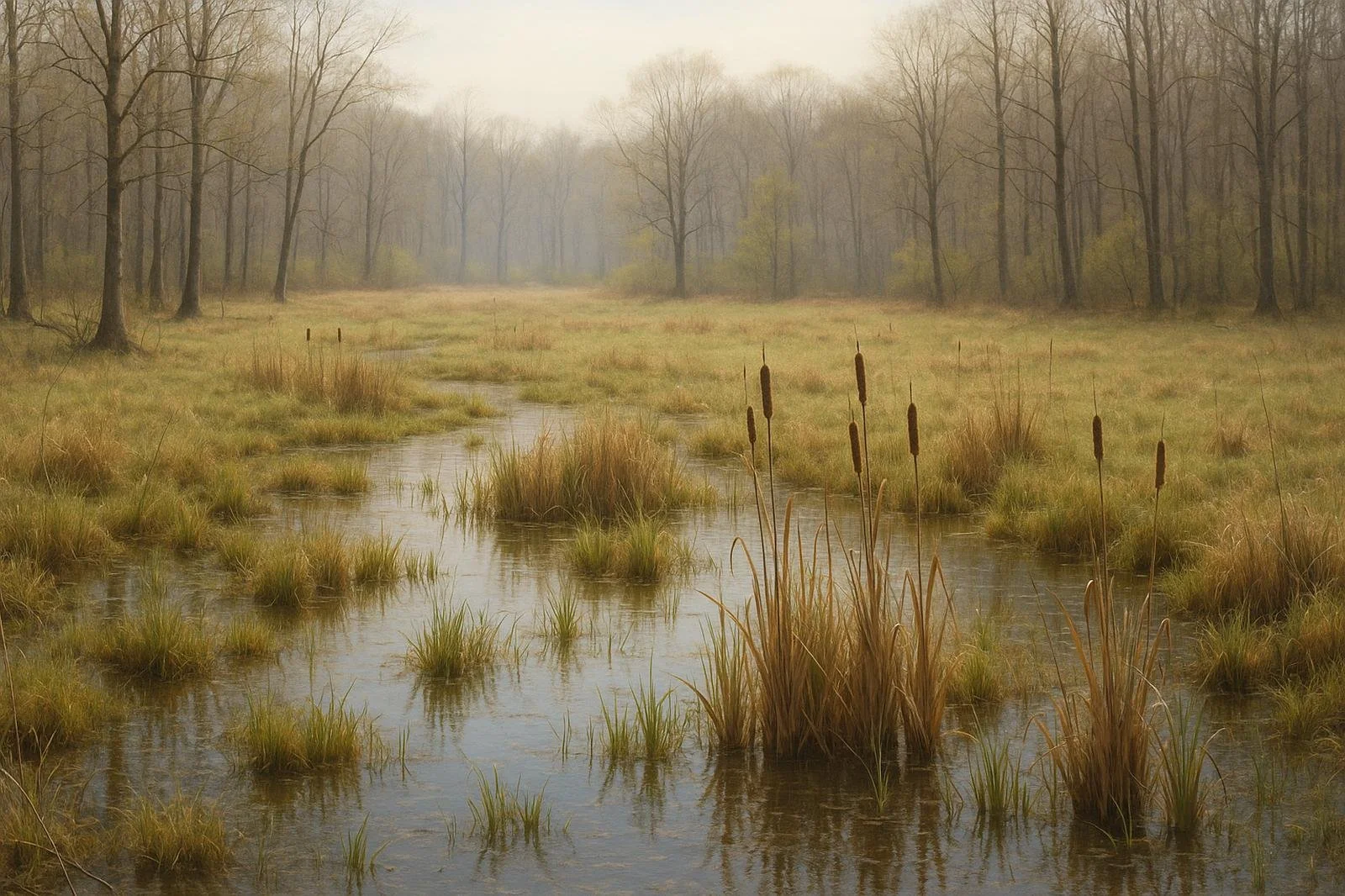
Since 2025, state wetland rules can apply even where no map shows a wetland.
This one catches people off guard. New York rewrote its freshwater wetland rules starting January 1, 2025, and a court decision on April 8, 2026 changed how DEC is applying them. Right now DEC says it requires permit applications for projects that affect wetlands it mapped before 2025, or wetlands of 12.4 acres or more, along with a regulated buffer around them called the adjacent area.
DEC's schedule still has that size cutoff falling to 7.4 acres on January 1, 2028. If the lot stays soggy in spring, has a stream or a low, swampy corner, or borders a bigger wetland, ask the Department of Environmental Conservation for a jurisdictional determination before you buy. You should get their answer within 90 days. Federal wetland rules can apply separately, so a wetland consultant is worth calling on any parcel where water is part of the picture.
Zoning: what the town will let you build
Zoning is set town by town in Ulster County, and two neighboring towns can treat the same lot very differently. Start by looking up the minimum lot size and road frontage for the district. After that, look at setbacks from the road and the property lines, height limits, and any overlay district for steep slopes, ridgelines or scenic views. On steep land, some towns look harder at the driveway and the house site than others do.
You'll also want to know it's a legal building lot. Land that was split off without proper subdivision approval can cause trouble, and so can a lot you can only reach by easement. Call the town's building or zoning office to find out what applies, and try to get a zoning letter in writing before you close.
Access and power: getting to the house site
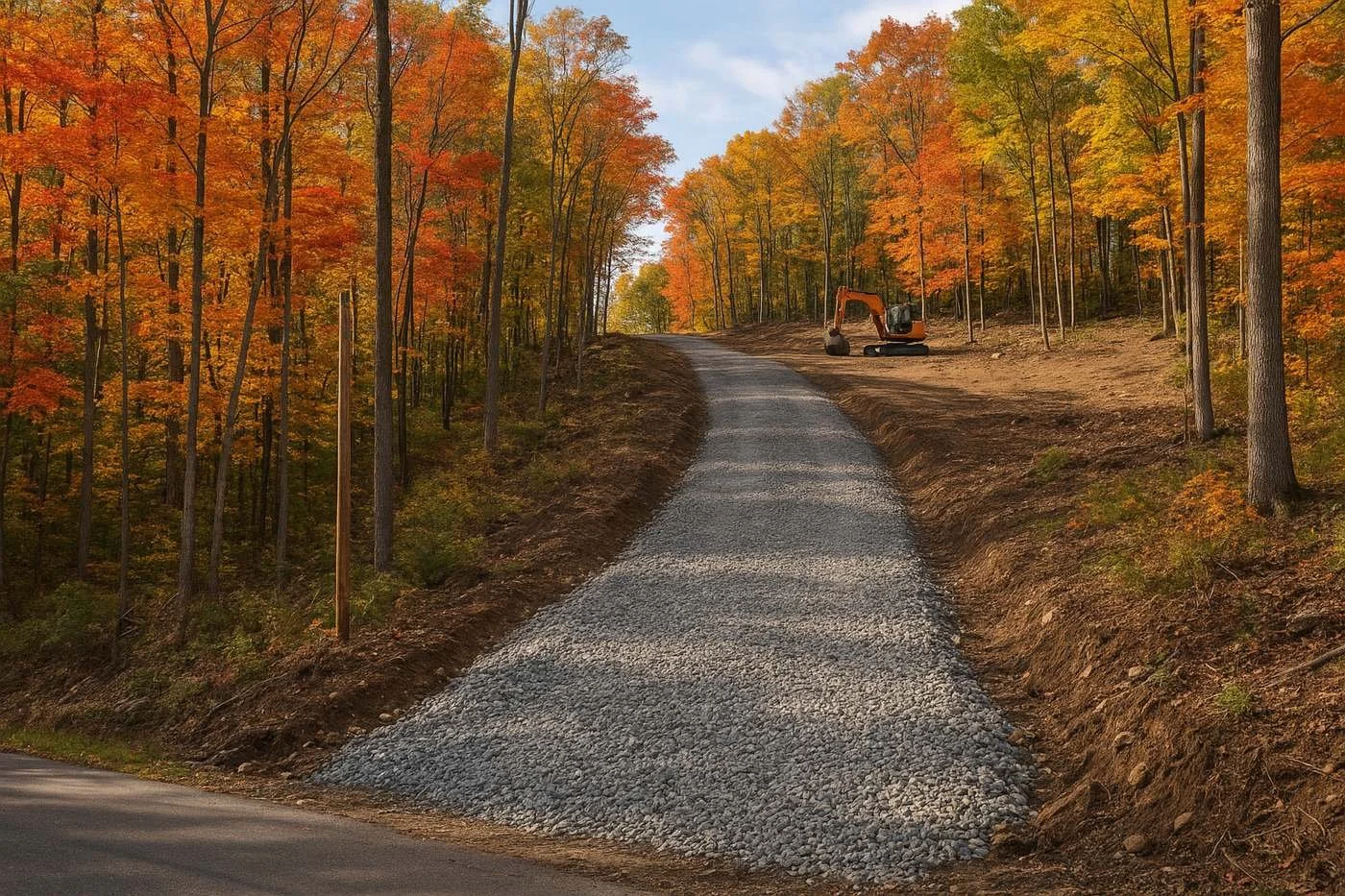
Long driveways and power runs are among the most underestimated costs.
People tend to lowball the driveway on rural land. It has to stand up to construction trucks. You'll need a curb cut permit from whoever owns the road, whether that's the town, the county or the state, and there may be grade and width rules so a fire truck can get up to the house. A long, steep one costs a lot to build and keeps costing you every winter when it needs plowing.
Power matters just as much. Figure out how far the closest utility pole is from where the house would go, then ask the utility (around here that's usually Central Hudson or NYSEG) what it would take to bring service in. A short run from the road is routine. A long run through the woods can be a significant line item, and it's one you want to know about before you buy, not after.
Slope, rock and the NYC watershed
That Hudson Valley view usually means a slope, and a slope means more digging, taller foundation walls, maybe a retaining wall, a longer driveway and more thought about drainage. In parts of the county the bedrock sits close to the surface, and then you're hammering or blasting just to get a foundation in. Dig a few test holes where the house would go and you'll learn a lot.
There's one more location question. Some of Ulster County drains into New York City's reservoir system, the Ashokan Reservoir among them, and land inside the city's watershed gets extra review on things like septic and stormwater. If your parcel is in it, plan for that review from day one.
Bring your builder in before you close

A site walk before closing can find a better house site, or a reason to pass.
Everything on this list ends up shaping the design and the budget of the house. That's why we'd rather walk the land with you before you buy, back when what we find can still change your decision. Someone who builds on Hudson Valley land can spot a hard driveway, a tricky septic area or a better house site before you've committed. P.A.S Design Build helps clients with site planning and permitting, and that work goes best when it starts early. If you're leaning toward a semi-custom, net-zero home, the same land questions apply to our NetBuilt homes.
A quick land checklist
Soil and septic: existing test results, or new deep hole and percolation tests.
Water: neighbors' well depths and any known water quality issues.
Wetlands: a DEC jurisdictional determination if there's any water on or near the land.
Zoning: lot size, frontage, setbacks and overlays, with a zoning letter in writing.
Legal lot status, and how you reach it, easements included.
Driveway permit requirements and a realistic driveway route.
Distance to utility power and an estimate from the utility.
Slope and bedrock, plus whether you're inside the NYC watershed.
FAQ
-
Soil and percolation testing is normally done by a licensed engineer or other qualified design professional, who also designs the septic system. Testing during your due diligence period, before closing, is the safest time. Some sellers have already done it, so always ask.
-
Often, yes, as long as the house, septic, well and driveway can be placed outside the regulated wetland and its adjacent area, or you get the required permits. The key is knowing where the regulated areas are before you buy, which is what a jurisdictional determination tells you.
-
Not necessarily. Rules change, and an old test may have been done for a different house site or a smaller house. An old passing test is encouraging, but it isn't a promise, so check with the health department and your designer about what you'd need today.
-
There isn't one answer that fits every lot. Begin with the town's minimum lot size for the zoning district. Then work out how much of the lot your septic, well and setbacks will eat up, given that soil and that slope. A big lot with bad soil can end up with less room to build than a small lot with good soil.
Looking at land and want a second set of eyes? Request a Consultation or call (845) 532-3174.