

Yes, a cold-climate heat pump can carry an old Hudson Valley house through a Zone 6 winter. We see it work when three pieces line up. The unit has to be a real cold-climate model. Somebody has to size it from an honest heat-load calculation. And the drafts and thin insulation need fixing first, or at least a plan for fixing them. Get those right and the age of the house mostly stops mattering.
What to sort out first
We tell homeowners the same handful of things every time. The model goes on the NEEP cold-climate list or it's off the table, and NYS Clean Heat agrees with us on that one for air-source units. Sizing gets done room by room, and it goes better once the sealing and insulation are finished. Your house will pretty much pick ducted, ductless or air-to-water for you. Settle partial load versus full load before quotes come in, since the incentives aren't the same. Then look hard at your electrical service and where the outdoor unit will sit in the snow.
Will it actually keep us warm in January?
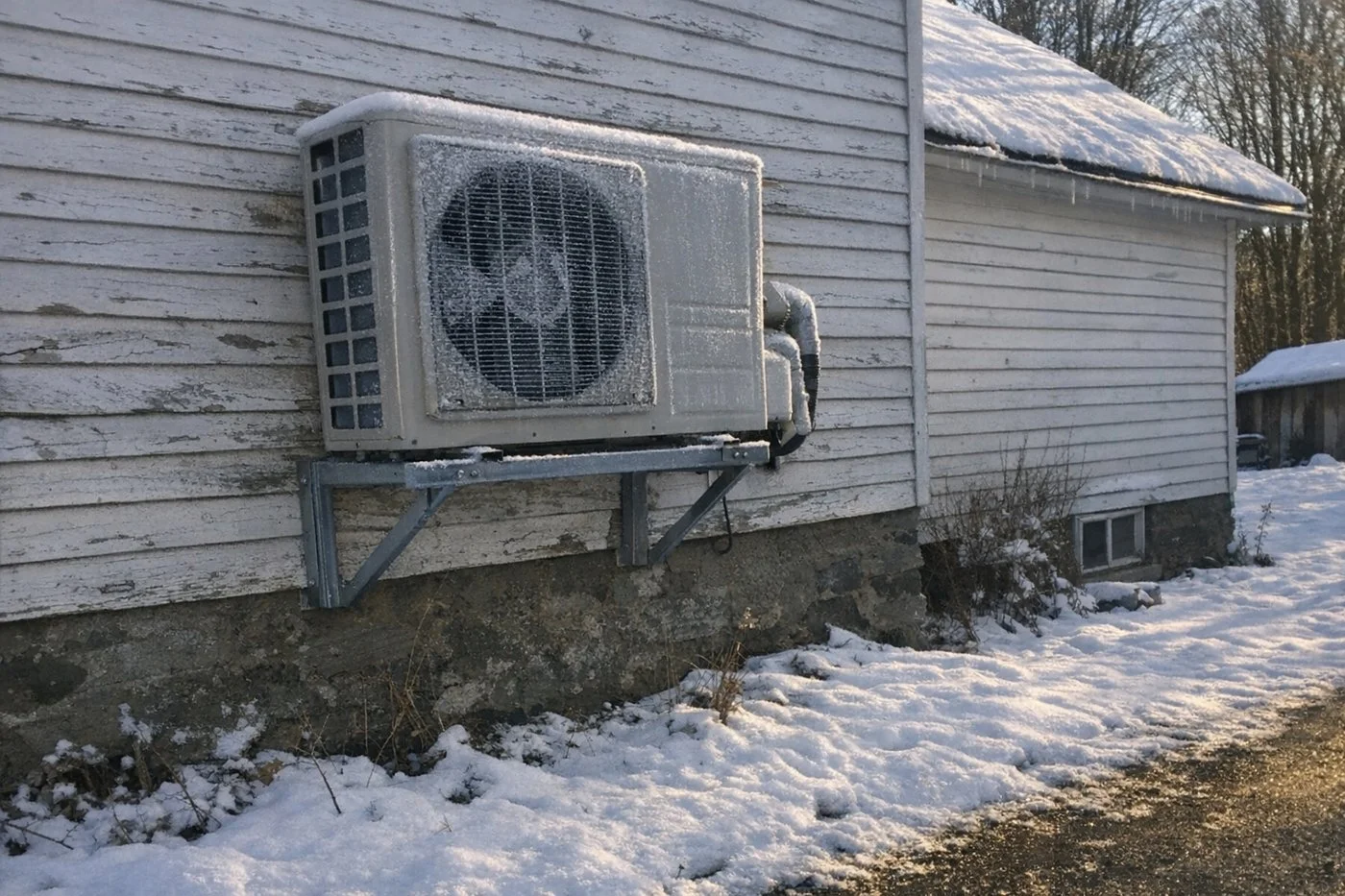
Cold-climate models are built to keep heating on nights like this.
The old reputation comes from older equipment. A plain heat pump gives up a good chunk of its output as the thermometer falls, so on a January night it can't keep up. Cold-climate models were built for exactly that night. They keep pushing out heat at much lower outdoor temperatures, and around here that's the only kind worth buying.
Telling them apart isn't hard. The Northeast Energy Efficiency Partnerships (NEEP) keeps a public list of cold-climate air-source models, and for each one you can see what it really delivers on a cold day. New York's Clean Heat program only accepts air-source equipment from that list, so it's a handy filter whether or not you ever apply for money. Got a quote in hand? Ask which NEEP listing matches the exact model, then read its cold-temperature capacity instead of the size on the nameplate.
In an old house, sizing is the whole game
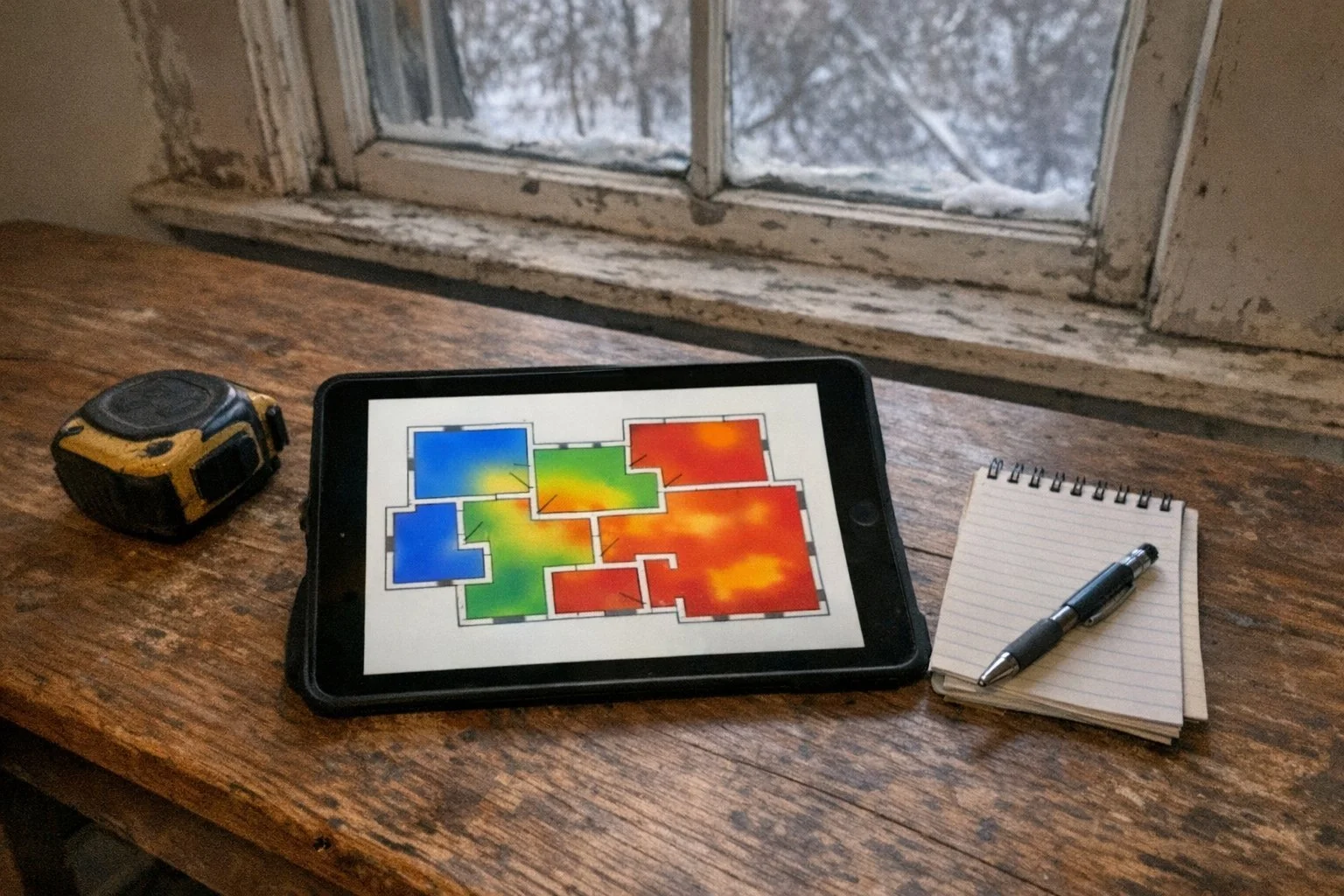
Size to the house as it will be, not to the old boiler.
Here's the catch with any heat pump, cold-climate or not: it puts out less heat on the worst night of the year than on a mild one. So we size for the worst night your area actually gets. That takes a room-by-room heat-load calculation. Square-footage rules and "match the old boiler" guesses don't cut it.
Old houses complicate this. Think of a 1900s farmhouse with gappy windows and almost nothing in the walls. Size for that, button the place up a year later, and now the heat pump is way bigger than it needs to be. An oversized unit short-cycles, burning energy and leaving summer air clammy because it never runs long enough to dry it. Our advice is to seal and insulate first when you can, and size for the house you'll end up with. Our guide to the right order for a whole-house energy upgrade is where we lay that out.
Which kind fits your house
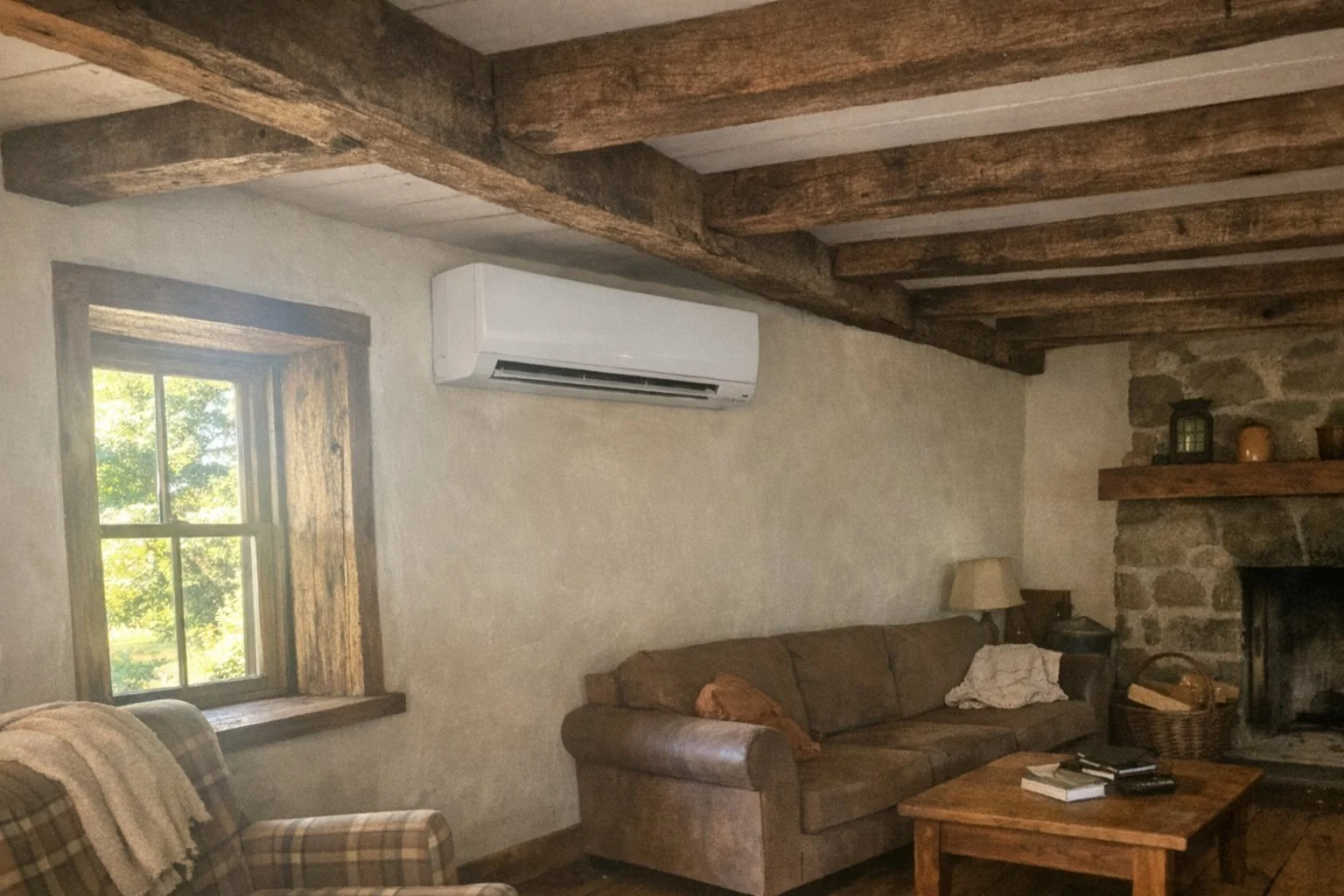
Ductless heads suit houses that never had ductwork.
The house usually tells you which type fits.
Ducted systems work when there's existing ductwork worth keeping. A heat pump moves air differently than the furnace or central air those old ducts were built for, so they may need changes. Get them looked at. Don't assume.
Ductless mini-splits are the wall-mounted heads you've probably seen, tied by skinny refrigerant lines to a unit outside. Old houses that never had ducts take to them well. Lots of little closed-off rooms? That takes more planning, because a head in the hallway won't warm the back bedroom.
Air-to-water heat pumps are the odd one out, since what they heat is water. They're worth a look in houses with radiant floors, and sometimes with existing hydronic systems. On our Minnewaska project in Kerhonkson, a heat pump handles primary heating and cooling, with supplemental fan coils for extra summer capacity and radiant floor heat throughout. Old cast-iron radiators were designed for very hot water, so whether they'll work with a heat pump's lower water temperatures depends on the house and needs to be checked by the designer.
Keep the boiler as backup, or go all the way?
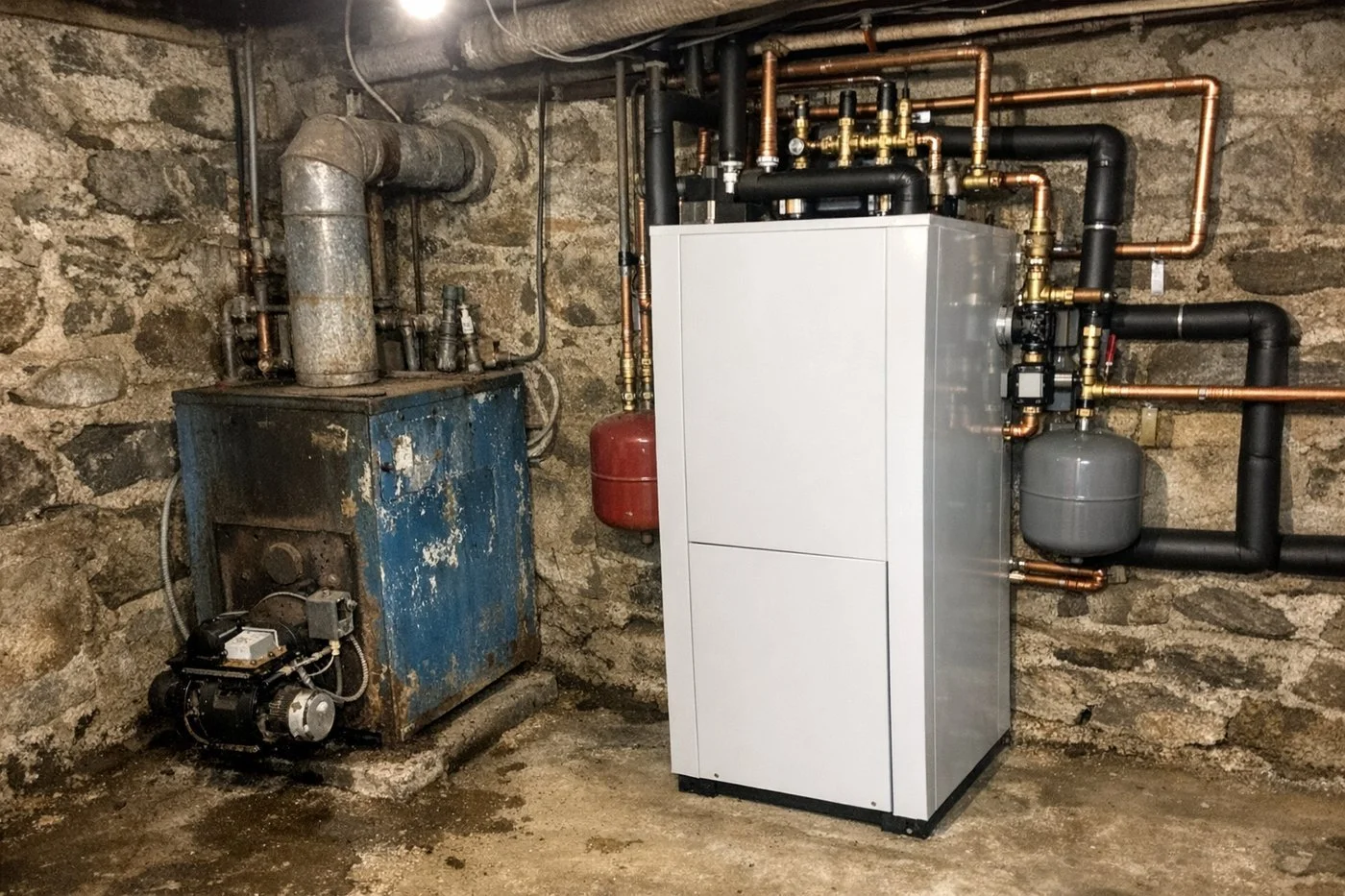
Decide whether the old system stays as backup before you collect quotes.
This is one of the biggest decisions, and New York's Clean Heat program draws the line clearly. A partial-load system covers less than 100 percent of the home's heating load, with the existing boiler or furnace still handling the coldest days. A full-load system is sized to carry the entire heating load on its own.
Partial load makes sense as a first step for plenty of people, especially if the envelope work won't happen for a few years. The catch is controls. The heat pump and the old boiler have to be wired to work as a team, with the heat pump doing most of the lifting and the boiler kicking in only on the bitter days. Full load means you can eventually retire the oil tank or propane equipment entirely. Incentive levels differ between the two, so decide which one you're doing before you collect quotes.
Check the electrical service
Going from oil or propane to a heat pump puts more on your electrical service. In a lot of older houses, that service is small and the panel is already packed. Before you sign, have someone check the service size and the panel's condition, count the open breaker slots, and compare all that with what the new equipment will draw. You might need a panel or service upgrade. You might not need a thing. Do the math before anyone sells you either answer.
Snow, placement and the outdoor unit
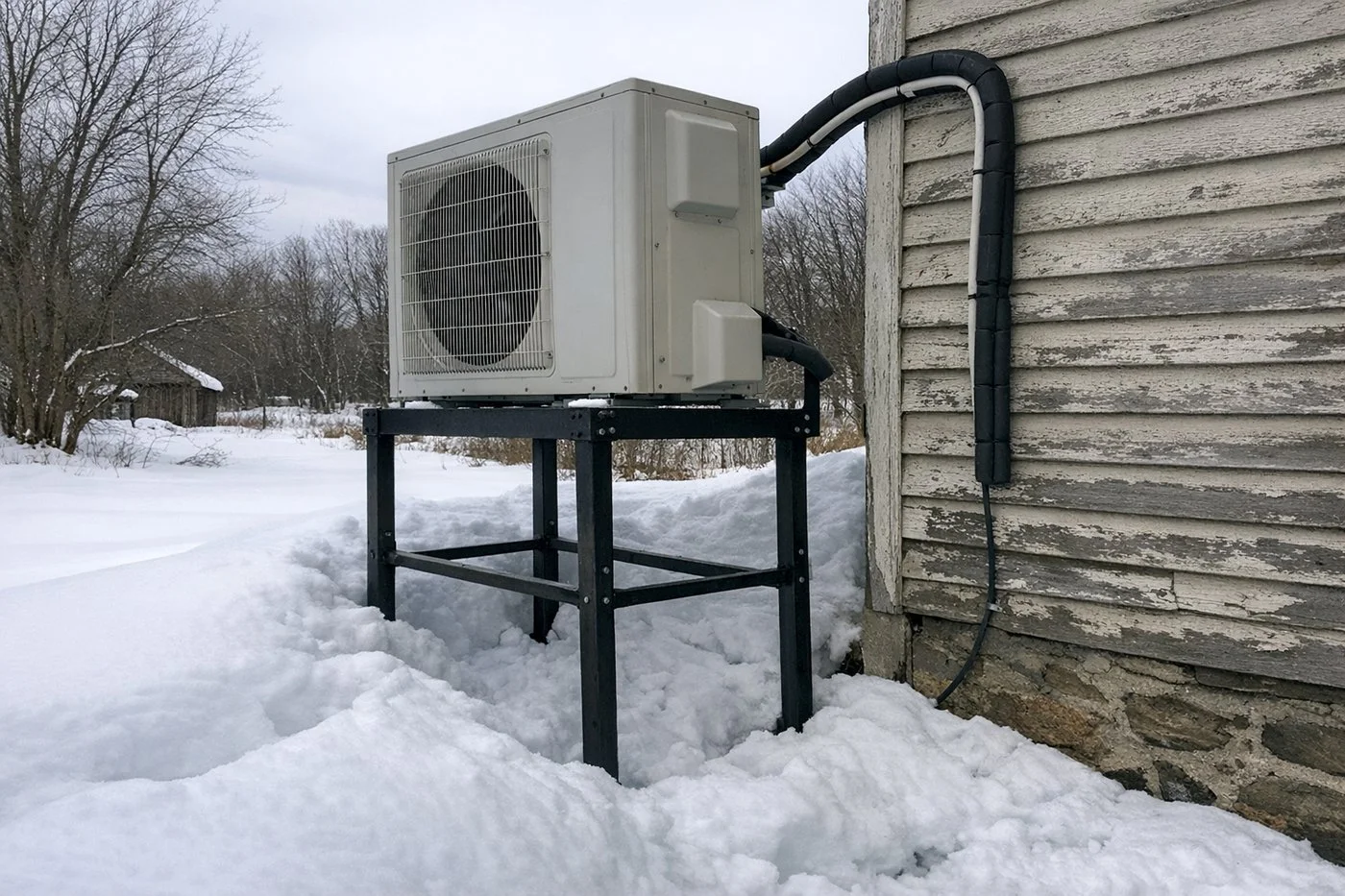
Keep the outdoor unit above the drifts and out from under the roof edge.
All winter long, the outdoor unit needs air. We put it up on a bracket so drifts don't bury it, and never under the drip line where the roof sheds snow and ice. The defrost water needs somewhere to drain, too. Otherwise you get a little skating rink by the back door. Even Clean Heat's program tools factor in snow depth when they look at an installation.
Location matters for noise as well. It also sets how long the refrigerant run is and how visible that line set will be on an old clapboard wall. If your place has some history or character to it, talk through the line routing with us well before the crew shows up.
Paying for it
If you were counting on the federal 25C tax credit, it's gone for heat pumps placed in service after December 31, 2025. What's left locally is mostly New York's Clean Heat program, which the state has continued through 2026 to 2030. It's run through the electric utilities, including Central Hudson and NYSEG, for one- to four-family homes, and the work has to be done by a Clean Heat participating contractor. If your household qualifies on income, check out NYSERDA's EmPower+ program as well. Amounts shift a lot. Call your contractor or utility for current numbers the month you're planning.
FAQ
-
A cold-climate model keeps heating long after older units would have quit, though it does put out less as the temperature sinks. Don’t chase a single number. Look the model up on NEEP, see what it puts out when it’s frigid, and hold that up against your house’s heat loss on a design-temperature night.
-
No, it isn’t required. It’s usually the smarter order, though, since a tighter house lets you buy a smaller system that runs more efficiently. If the heat pump has to go in first, ask for a heat-load calculation that assumes the envelope work you’re planning, and size to that.
-
Yes, because you’re moving your heating to electricity. What matters is your total energy cost, since you’ll stop buying oil or propane. How that comes out depends on fuel prices, electric rates and how efficient your house is, which is one more reason to tighten the envelope.
-
Sometimes. With an air-to-water heat pump, an existing hydronic system can stay, as long as the radiators can still warm each room with the cooler water a heat pump sends them. Whether they can comes down to the radiators themselves and how fast each room loses heat. Someone has to run the numbers.
Planning a heat pump for an older house? Request a Consultation or give us a call at (845) 532-3174.