

If you love the land and the location, and the lot really has room for a bigger house, add on. But if the house, the land and where it sits are all wrong for you, go ahead and move. Before you pick, look up what zoning and your septic allow. Then total up what a move really costs you. And think about how long you'll stay, because that matters more here than resale.
The quick version
Add on when you love the land and location and the lot can take a bigger house.
Moving carries commissions, transfer tax, closing costs and the loss of land that's hard to replace.
Judge an addition by how long you'll stay, not by resale value.
Septic capacity and setbacks decide many Hudson Valley additions.
An addition is a good moment to fix the old house's comfort problems too.
Why this question is different here

In the Hudson Valley, people often stay for the land.
Most "renovate or move" advice is written for suburban houses on public sewer, where the question is mostly about resale value. Hudson Valley properties work differently. Up here, people tend to stay because of the land. Maybe it's the view, or the acreage, or the quiet road, or a garden you spent ten years getting right. You can't just go buy that again, and so an addition is often worth a lot more to you than any appraiser will write down.
The flip side is that rural lots come with limits suburban lots don't. Say your septic was sized for three bedrooms, or there's a steep slope out back, or the old house already sits tight against a setback. Any one of those can turn a simple addition into a complicated one. That's why the decision starts with the lot.
The real cost of moving
Moving costs more than people tend to count. When you sell, you pay the broker's commission and the attorney, plus New York's real estate transfer tax at $2 for every $500 of the sale price. When you buy, there are closing costs and inspections, a new mortgage at today's rates, and if the purchase is $1 million or more, the state's mansion tax on top. Then come the movers, the repairs the new house turns out to need, and the time.
Some of the biggest costs never make it onto a closing statement. There's the new drive to work, maybe a new school for the kids, the neighbors you'd miss, and that land you put years into. If all that's wrong is the house got too small, well, that one we can fix. Moving trades it for stuff you can't take back.
What an addition really costs, and why resale is the wrong test
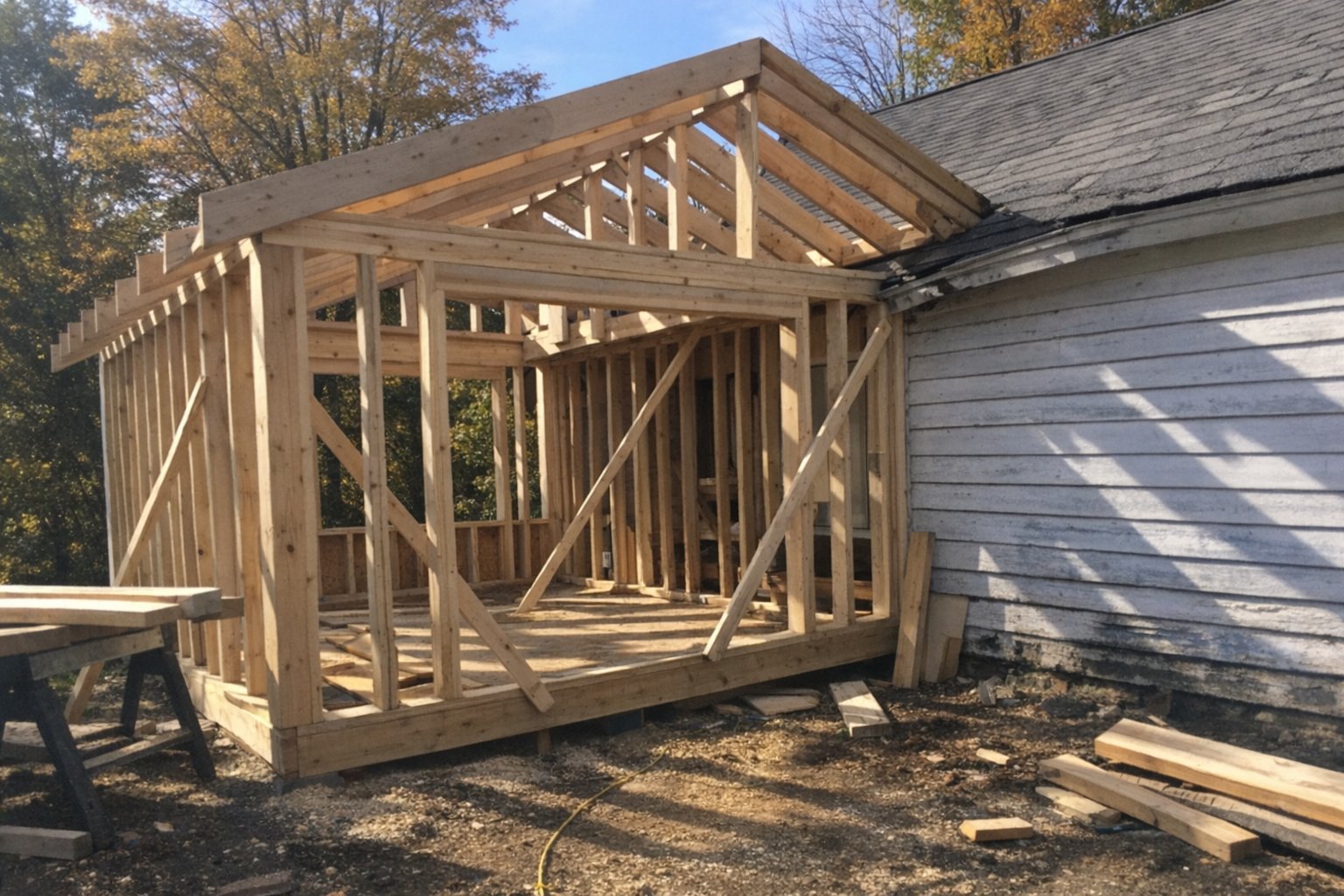
Much of an addition’s cost is in the connection to the old house.
A well-built addition isn't cheap. Foundations, roof tie-ins, structural work where the old house meets the new, and bringing heating and electrical along all add up. Additions also tend to cost more per square foot than the house around them, because so much of the work happens at the connection.
So we don't think resale value is a fair way to grade one. Sell a year or two after building and you'll usually get back less than you spent. Where an addition earns its keep is in the ten or twenty more years you get to live somewhere you love, with the room you actually need. If you're likely to sell within a few years, that math changes, and moving may be the smarter call.
Can your lot take it?
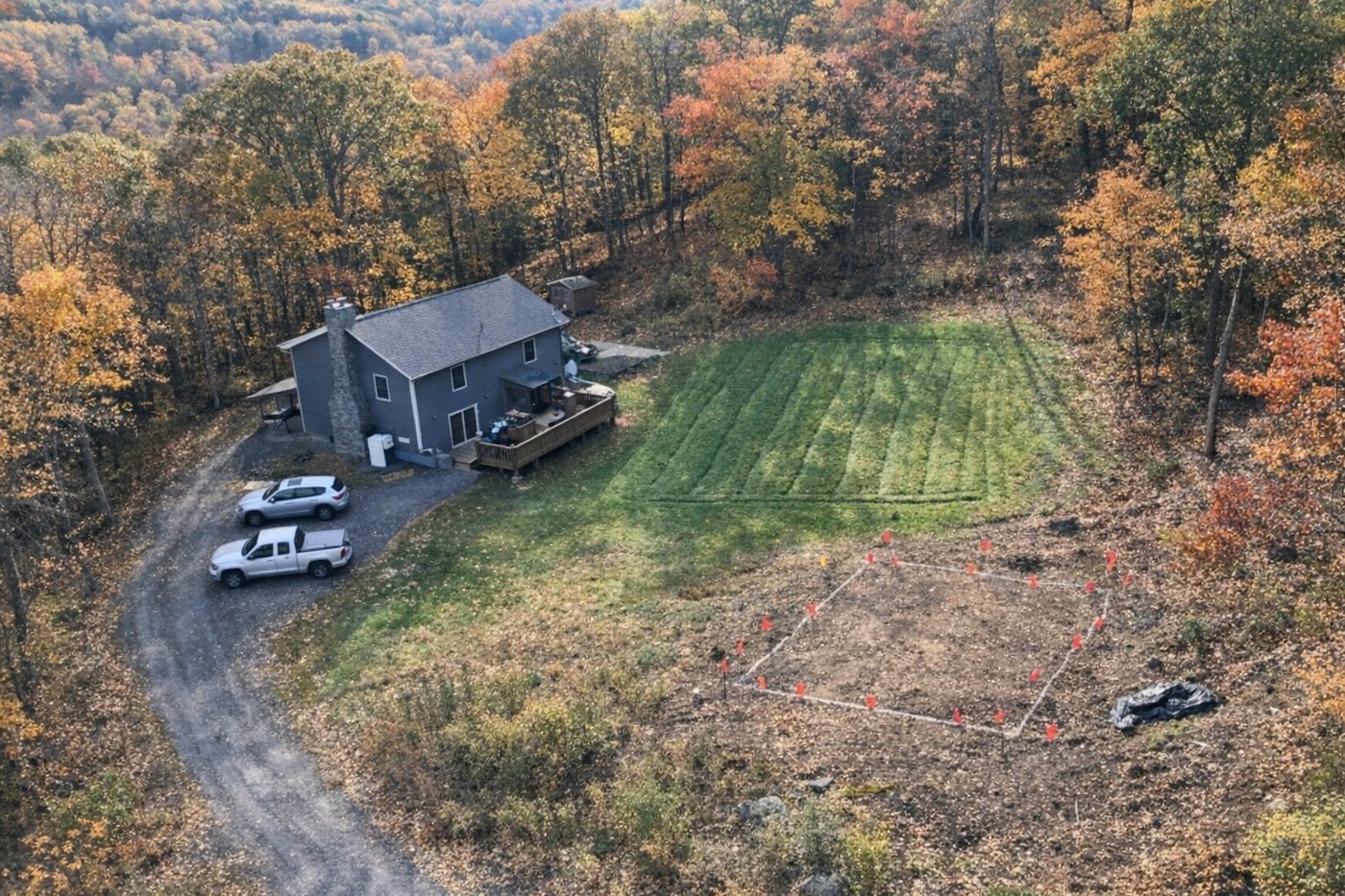
Setbacks, slope and septic decide where an addition can go.
Check the rules before you get attached to a drawing. Setbacks from the road and your lot lines vary town to town, and so do the caps on lot coverage and height. Some towns want a second look if you're on a steep slope or in a scenic area. Plenty of old farmhouses were built closer to the road than zoning lets you build now, so you may not be able to go toward the front at all.
Then there's the ground. On a slope, a rear addition gets expensive fast. Your well or septic field might be right where you'd want to expand. Hit ledge close to the surface and the foundation gets harder too. Walk the property with your builder before anyone draws anything, because that walk usually tells you which side of the house has room.
Septic capacity and bedrooms
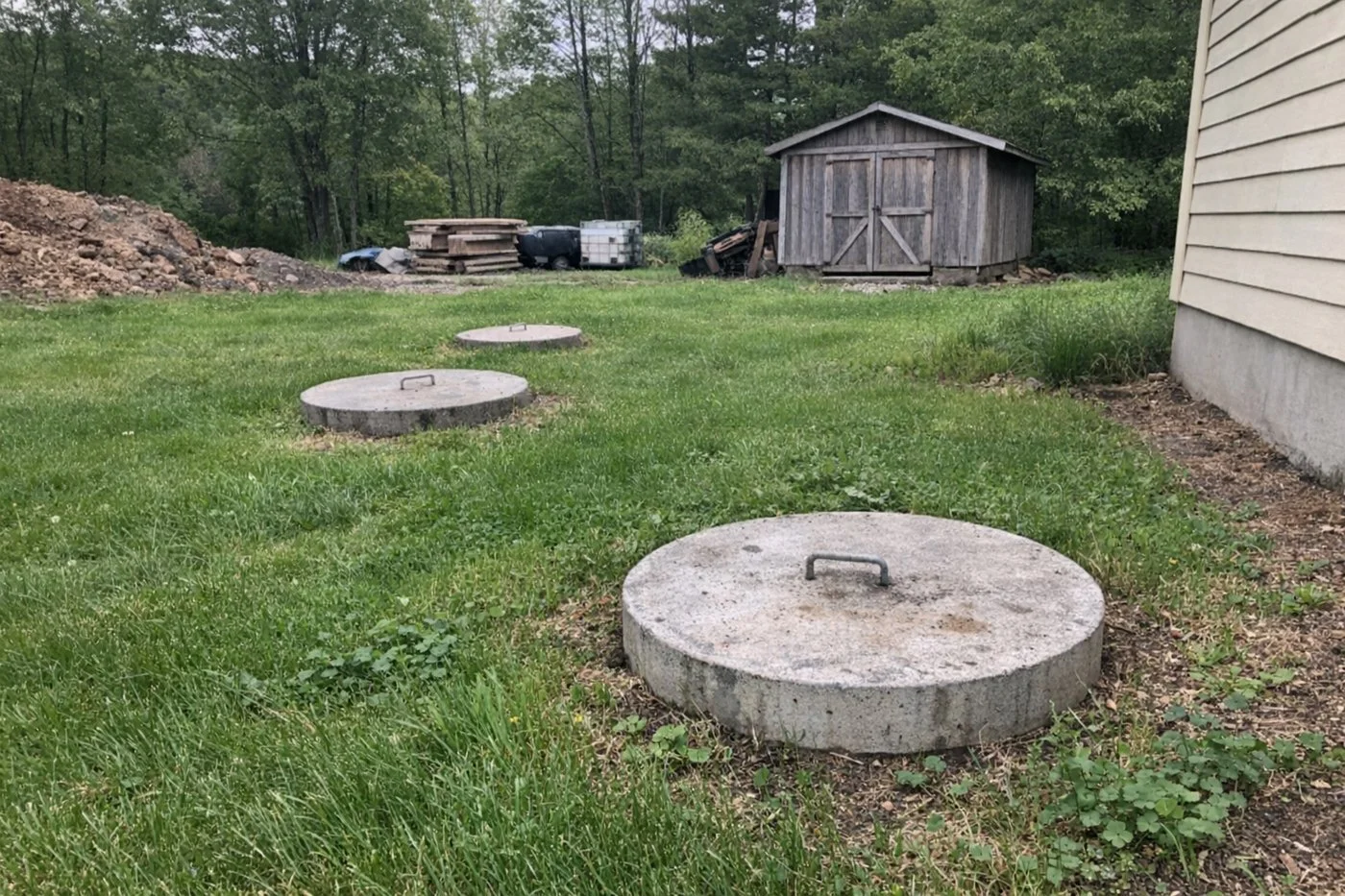
Adding a bedroom can mean a bigger septic system.
This is the constraint most national articles skip, and it decides a lot of Hudson Valley additions. New York sizes septic systems by bedroom count, with new designs starting at 110 gallons per day per bedroom. Add a bedroom and the health department will probably ask if your existing system can take it. Sometimes it can't, and you're looking at a bigger system or a new one.
So dig out the septic paperwork early on. How many bedrooms was it designed for? How old is it, and is it in decent shape? One thing that helps: if the new room isn't a bedroom, say a bigger kitchen or a family room or an office, most of the septic question just goes away.
When a detached ADU fits better
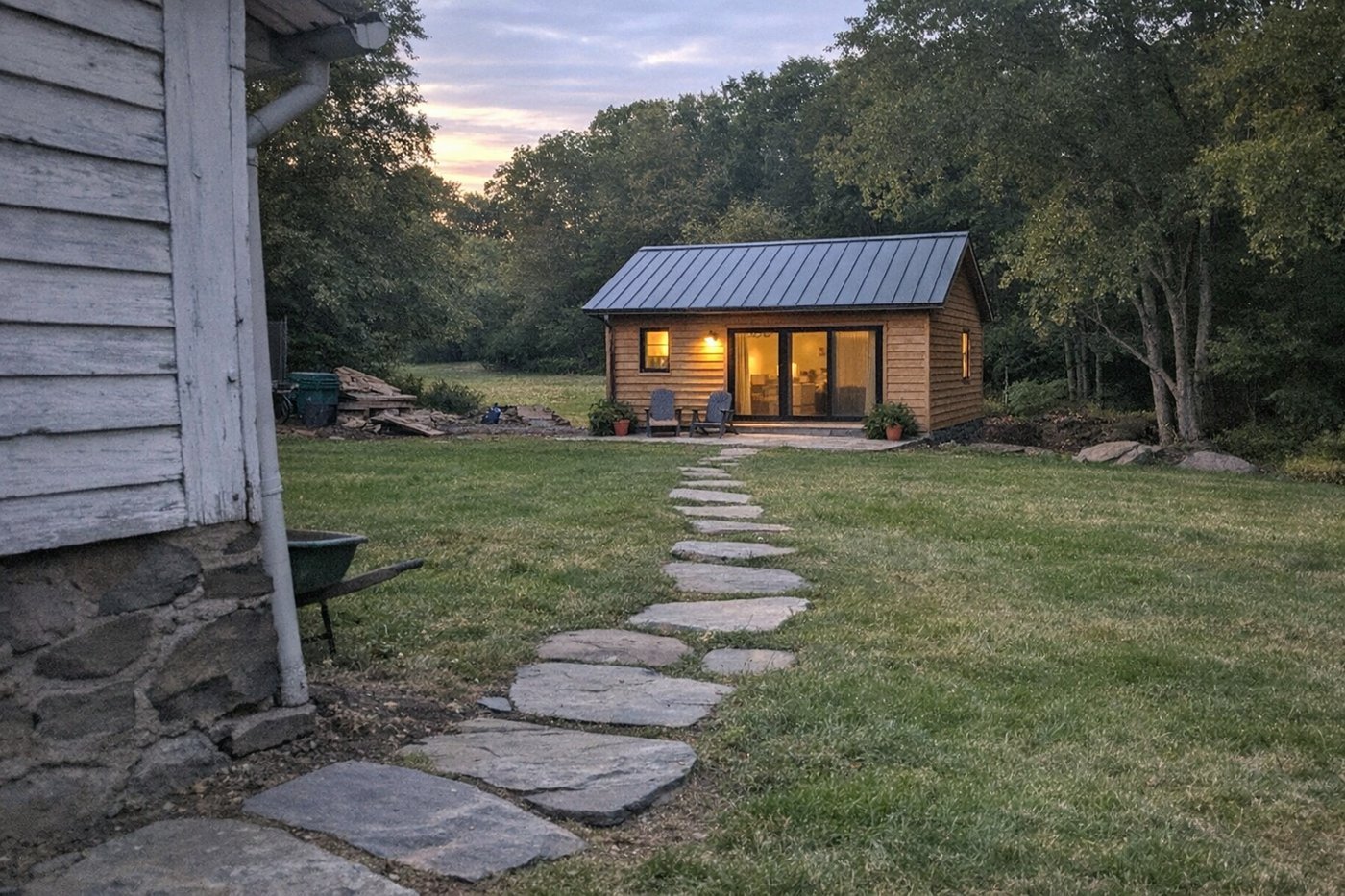
Sometimes the best addition is a separate building.
Now and then the answer is a separate building out back. A detached accessory dwelling might be a studio, a guest house, or a small place for Mom or Dad. It skips the tricky tie-in to an old structure, and everybody gets more privacy. You'll still have zoning, septic and utility questions to answer, but on some properties it's simply the cleaner answer.
Fix the old house while you're at it
An addition is a good moment to deal with the comfort problems in the original house. The walls are being opened where the new and old connect, the heating system has to be rethought anyway, and the electrical service may need an upgrade for the new space. Doing envelope and system work at the same time usually costs less than coming back for it later.
The order matters, though. Don't size the heating and cooling for the old house. Size it for the whole house after the addition and after the air sealing and insulation are done. We walk through that sequence in our guide to the right order for a whole-house energy upgrade.
Living through construction
Whether you can stay in the house during an addition depends on the scope. A separate wing with a short tie-in period is very livable. Tear into the kitchen or the heat or your one bathroom, though, and it's harder. Count on some weeks where life is messy. Have a backup place in mind for the days a system is off, and get your builder to plan the phases around the rooms you really need.
Add on or move: a quick comparison
Keeps your land and location: Add on - Yes; Move - No.
Main limits: Add on - Zoning, septic capacity, slope and the existing structure; Move - Inventory, prices and rates in the market you’re buying into.
Transaction costs: Add on - None; Move - Commissions, transfer tax, closing costs and moving.
Pays off best when: Add on - You plan to stay for years; Move - The house, the land and the location all fall short.
Chance to fix comfort and efficiency: Add on - Yes, alongside the addition; Move - Depends on the next house.
FAQ
-
Most likely, yes. More square feet usually bumps up the assessment. Ask your town assessor how they treat additions in your town.
-
Yes. Additions need a building permit, and the new part has to meet current code, including New York’s energy code. Septic review may also be required if you add bedrooms.
-
That comes down to your house. Going up means no new foundation and the same footprint, which helps with lot coverage and where the septic sits, as long as the existing structure can carry another floor. Building out is often simpler structurally but uses more of the lot.
-
Pull the system’s records first, since they’ll show what it was designed for. The Ulster County Department of Health and a septic designer can tell you what an added bedroom would require.
Thinking about an addition? Give us a call at (845) 532-3174 or request a consultation, and we'll talk it through with you.